Blockchain for ESG: A Practical Introduction to Web3 in Sustainability
TL;DR
Blockchain can strengthen ESG systems by improving transparency, traceability, and verification, especially in carbon markets, supply chains, and climate finance. But it only creates real value when paired with strong governance, standards, and credible measurement.
Where Blockchain Genuinely Helps ESG (and where it doesn’t)
Blockchain is most valuable when the challenge is trust, verification, and coordination across multiple stakeholders. It is less useful when the underlying problem is poor data quality, weak governance, or when organisations treat tokenisation as a substitute for real-world measurement.
Introduction
The world of sustainability is evolving fast. But, before we get into that, let’s talk about why. Just like sustainability, the internet is evolving. At the moment we are using a second generation of the internet, or Web 2.0 as it’s known. But, today I want to share how we can use Web 3 for ESG. This guide explains blockchain for ESG in plain English, and shows where Web3 creates real value for sustainability leaders. But before we get into that, let’s talk about where we are with Web 2.0
In Web 2.0, we as users interact with the internet. In a nutshell, Web 2.0 is described as ‘read and write.’ We particpate in the internet, and generate content. For example, not only can we read articles on Wikipedia, but we can also write on the internet through collaborating on documents together on Google Drive, or uploading selfies onto the ‘gram.
It’s easy to forget that the first version of the internet, Web 1.0, only had reading capability. It was read only. It had nothing else - no writing. So that’s no selfies, no Youtube videos, no article posting capability. It was a very basic, passive experience.
And whilst Web 2.0 means we have improved communication via web based apps enhancing interactivity, collaboration, and the sharing of knowledge, there are also some downsides. With so many people posting on blogs, social media, and other platforms, it's hard to know which information is true and which is misleading.
The problem is that:
Anyone can create content, making it tough to separate facts from fiction.
Fake accounts, scammers, and hackers take advantage of this lack of control.
Trust in online information is at risk because Web 2.0 doesn’t always verify sources.
Why Does This Matter?
With misinformation spreading so quickly, people are often tricked, misled, or overwhelmed. The internet should empower us, but instead, it sometimes creates confusion.
👉 So, What’s the Solution? Enter Web3...
Web 3.0 is the next generation of the internet. It is touted as bringing trust, transparency, and ownership; all essential ingredients for achieving the UN's Sustainable Development Goals (SDGs). According to a comprehensive review of Web3 technologies and evolution by Partha Pratim Ray, Web3’s decentralised and interoperable architecture promises far-reaching implications for data ownership, identity, and multi-stakeholder coordination.
It’s the next evolution of digital infrastructure. And it has been design based on design principles such as decentralization, democratized access, direct ownership, open source and interoperable code, verifiability, and incentive design.
Here’s what these principles mean in practice:
Understanding Blockchain Principles
At its core, blockchain technology operates on seven fundamental principles that redefine digital ownership, governance, and economic models.
From decentralization and democratization to verifiability and incentive design, these principles form the foundation of Web3’s promise: a fairer, more open, and sustainable internet.
What follows is an explanation of each of these principles, explaining how they work and why they matter. Whether you’re new to blockchain or looking to deepen your understanding, this guide will help you grasp how these innovations are shaping the future of technology, finance, and sustainability.
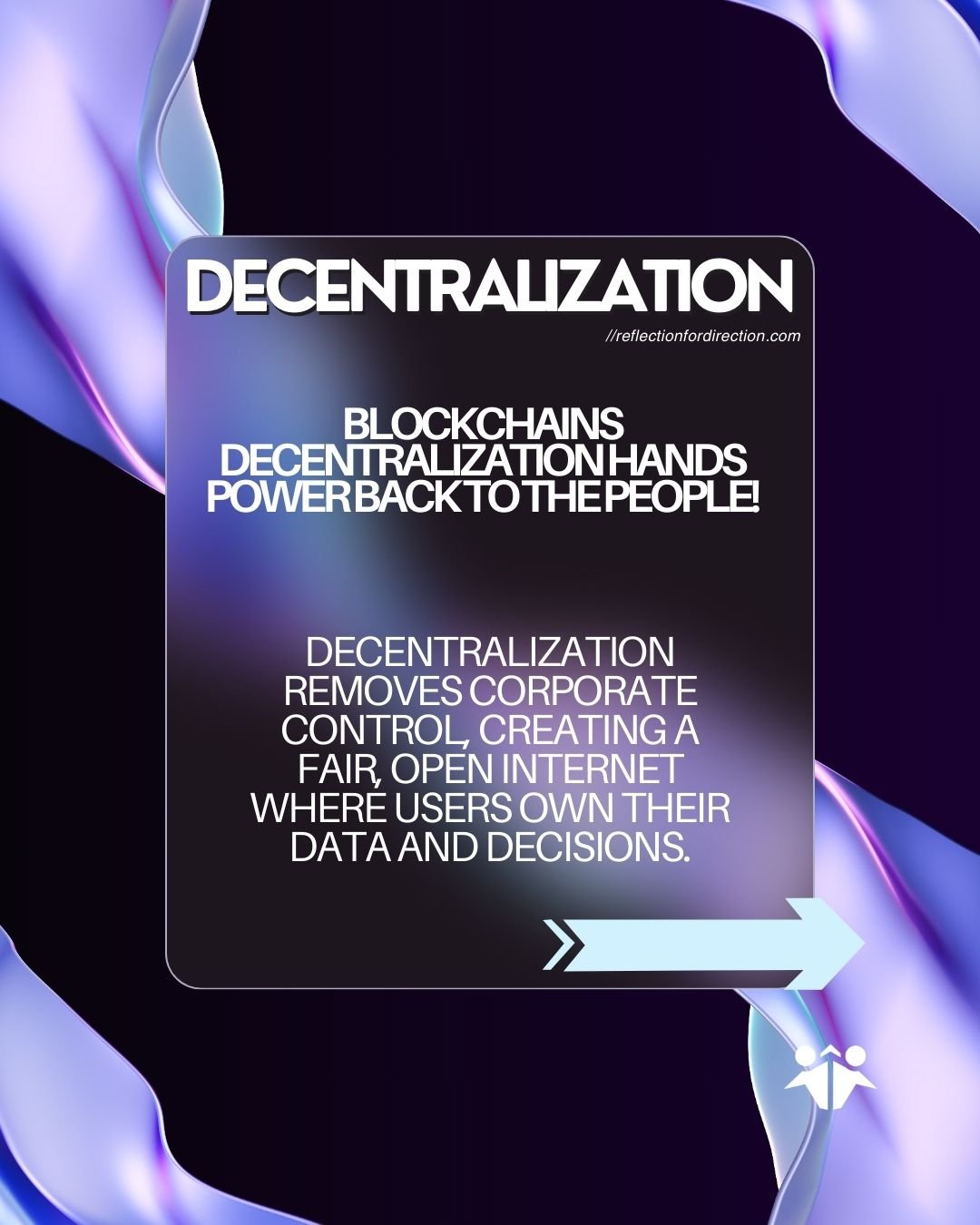
1. Decentralization
In the context of Web3, decentralization refers to the shift away from centralized authorities (like corporations, governments, or single entities controlling data and platforms) toward distributed networks powered by blockchain technology.
A world in which there is no single entity that pulls the strings—no corporations hoarding your data, no governments deciding who gets access. That’s the power of decentralization in Web3!
Instead of a few gatekeepers controlling the internet, power is spread out across a network of users—kind of like a hive mind working together. Blockchain technology makes this possible, ensuring that no one can censor, manipulate, or shut down a system on a whim.
Think of it as breaking free from digital feudalism—no more kings of the internet, just a truly open and democratic space where control is in the hands of the many, not the few. Welcome to Web3, where you have a say, and no overlords are calling the shots!
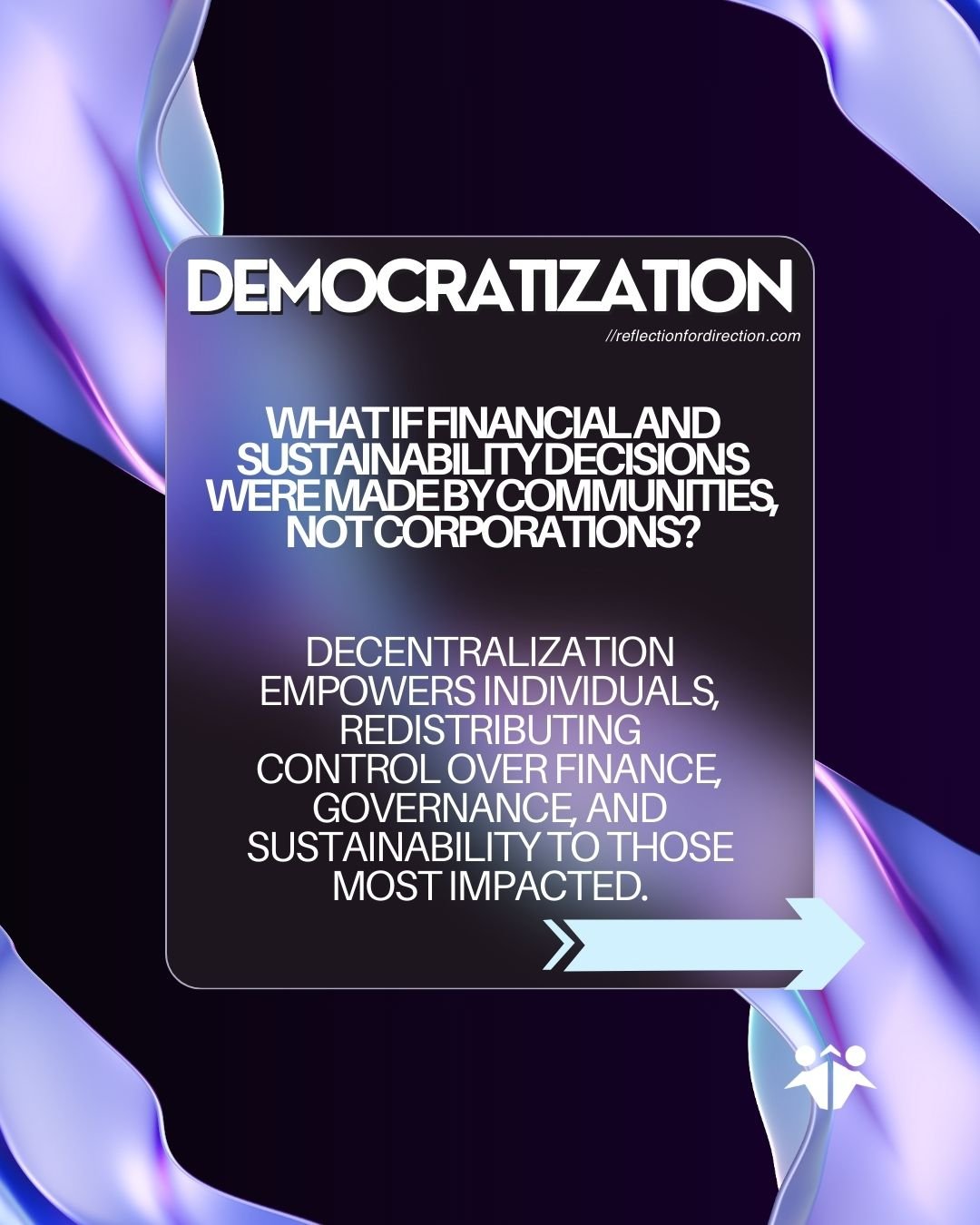
2. Democratization
Refers to making access, control, and decision-making more inclusive, open, and community-driven, rather than being dominated by a few centralized entities (like Big Tech companies, banks, or governments).
For example: DeFi (Decentralized Finance) allows anyone with an internet connection to lend, borrow, and trade assets without middlemen.
Instead of decisions being made by CEOs or centralized teams, DAOs (Decentralized Autonomous Organizations) allow users to vote on platform changes using governance tokens.
From a sustainability perspective, it can democratize ownership and reallocate resources to shift power dynamics to the people most knowledgeable of, and most vulnerable to, the effects of climate change.
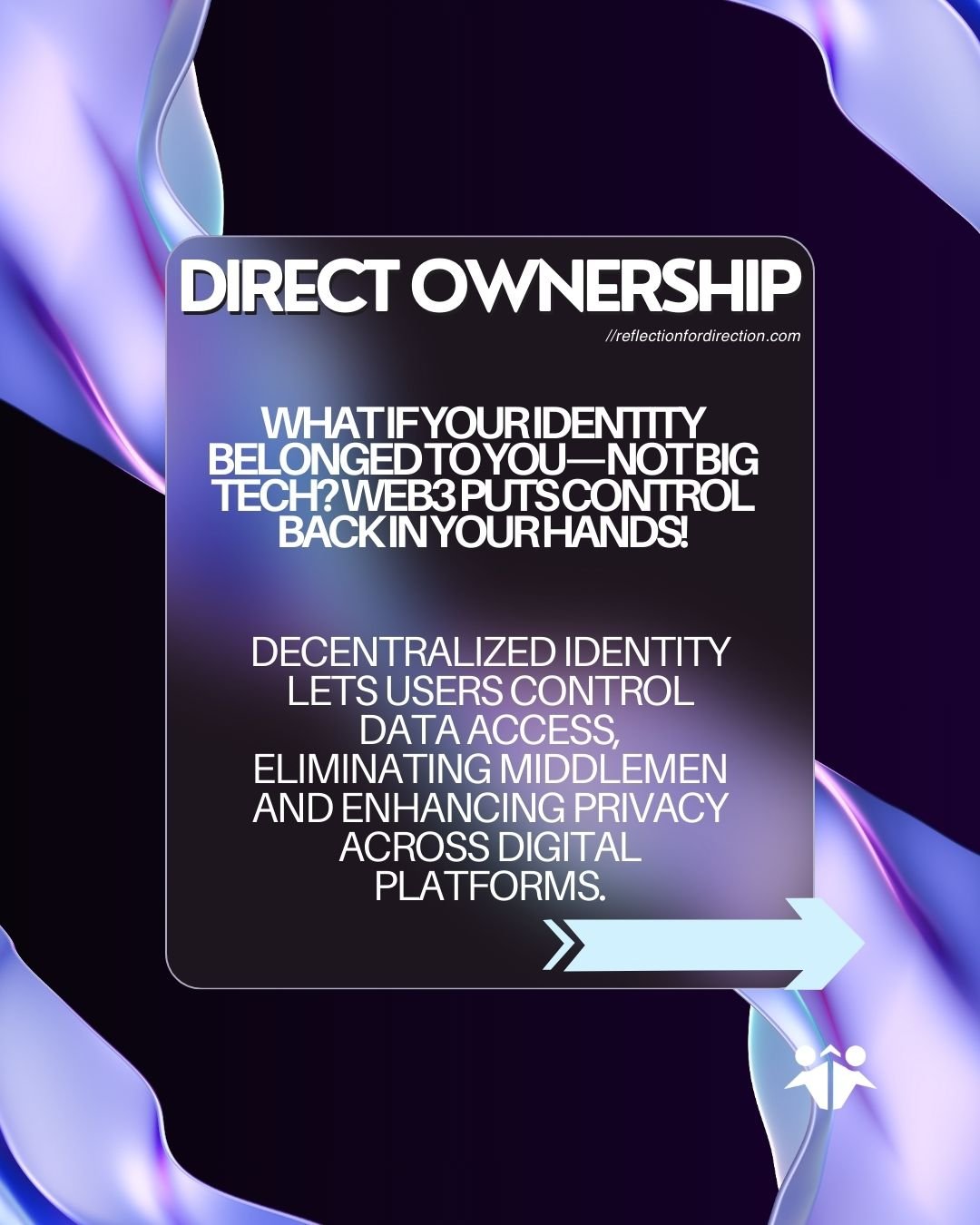
3. Direct Ownership
In this digital ecosystem you are in control. No more tech giants hoarding your data like a dragon guarding gold. In Web3, you own your identity, data, and digital assets. No permission needed, no middlemen taking a cut.
With Decentralized Identity (DID), you decide who gets access to your info and when. No more handing over your entire life story just to log in. Say goodbye to endless passwords and duplicate accounts; one identity works across all platforms, like a universal key .
This isn’t just about convenience; it’s about power and privacy. You reclaim control from corporations, reducing data exploitation and boosting social sustainability. Your identity should belong to you—not to Big Tech. Web3 makes that a reality.
Here, Yat Siu explains the metaverse, Web 3 and blockchain and it’s link to ownership and digital property rights:
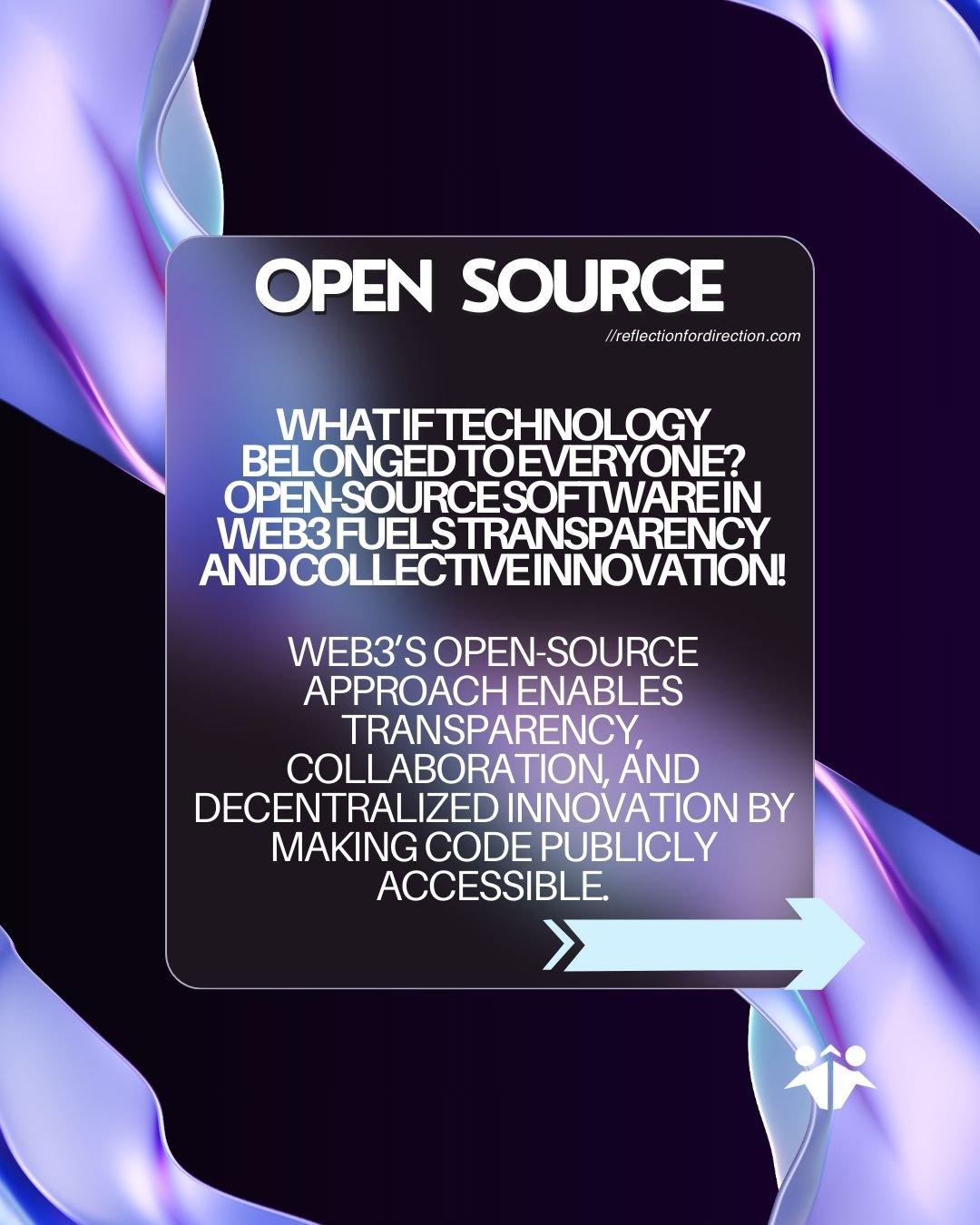
4. Open Source
This refers to the practice of making software publicly accessible, allowing anyone to view, modify, and contribute to the codebase. This is a core principle of Web3, aligning with its ethos of transparency, decentralization, and community-driven innovation.
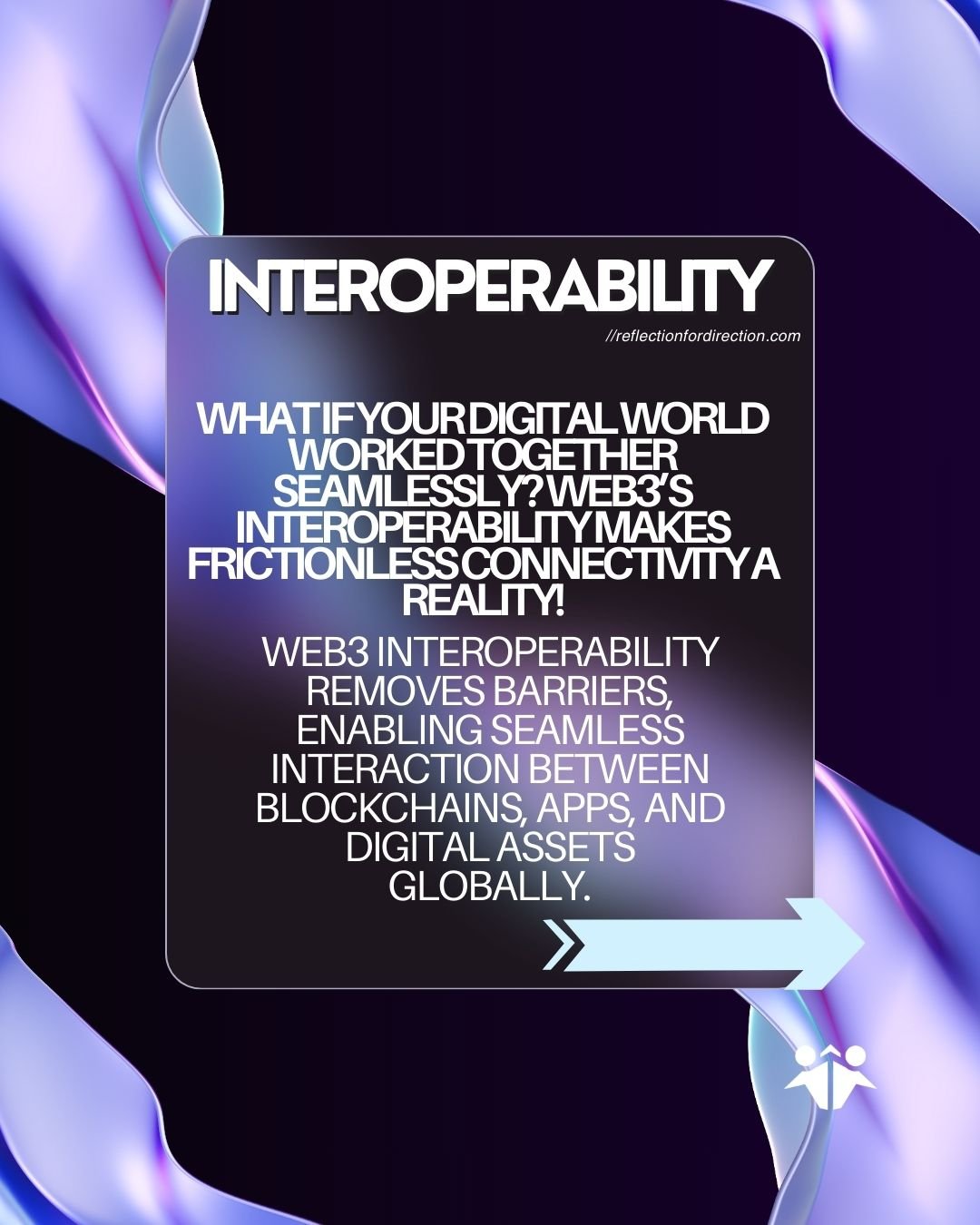
5. Interoperable Code
Imagine a world where your digital assets, data, and apps talk to each other effortlessly—no roadblocks, no walled gardens, just pure connectivity! That’s the magic of interoperable code in Web3.
Unlike Web2, where platforms hoard users and data like a dragon guarding treasure (think: Facebook and Twitter not playing nice or Apple and Google keeping their ecosystems separate), Web3 breaks down these barriers.
With interoperability, your tokens, smart contracts, and decentralized apps (DApps) can seamlessly flow across different blockchains and platforms, just like sending an email works across different providers. This means more freedom, more efficiency, and fewer tech headaches. No more "Sorry, this feature isn't supported here" messages!
Web3 is building bridges, not walls—ensuring that everything works together for a more open, sustainable, and connected digital future.
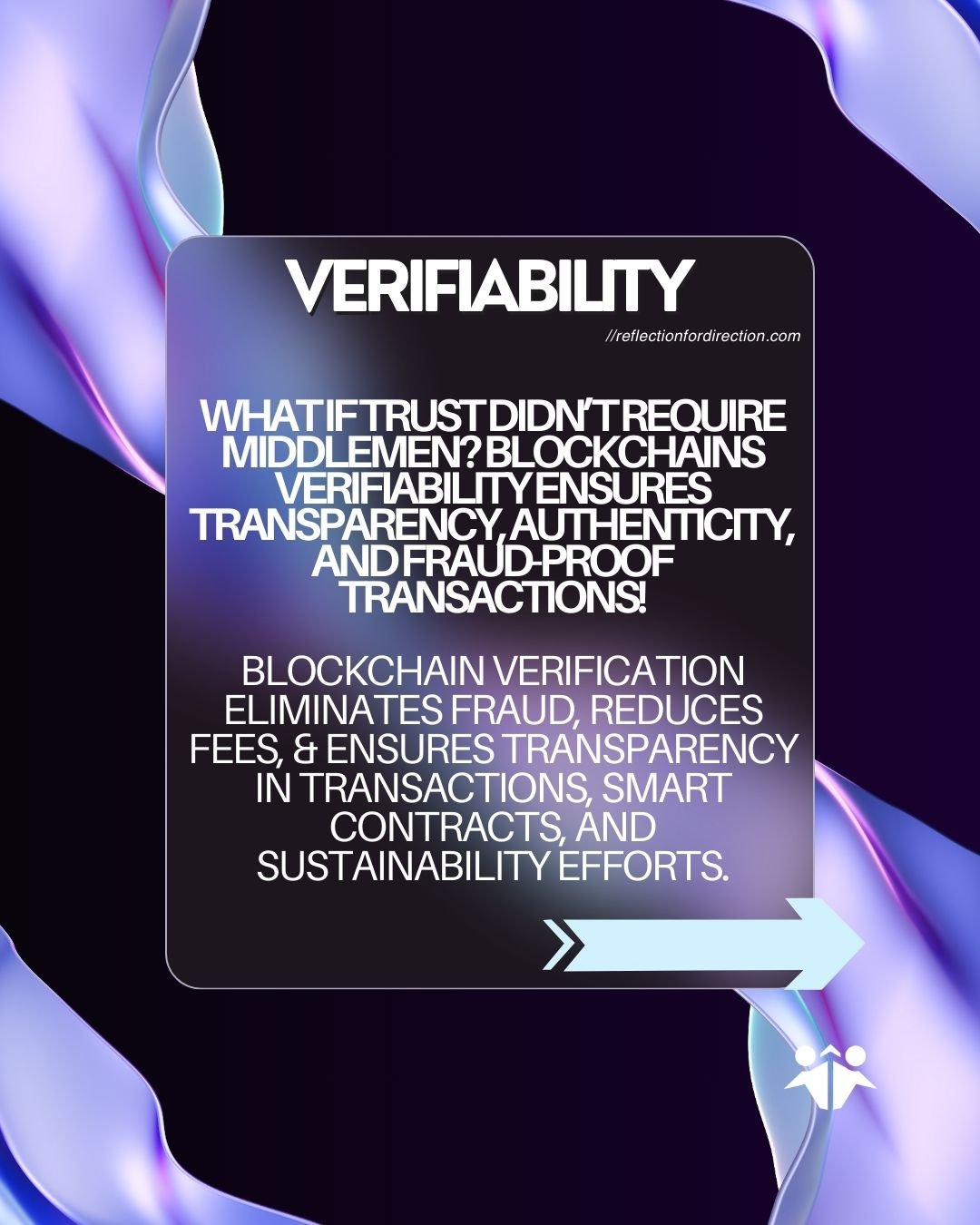
6. Verifiability
Refers to the ability to independently confirm the authenticity, integrity, and correctness of data, transactions, smart contracts, and identities without relying on a central authority.
This means that when smart contracts there is no need for middlemen. This eliminate banks, notaries, and third parties, reducing fees. It also prevents Double-Spending & Fake Carbon Credits because blockchain verifies carbon credit authenticity, stopping greenwashing.
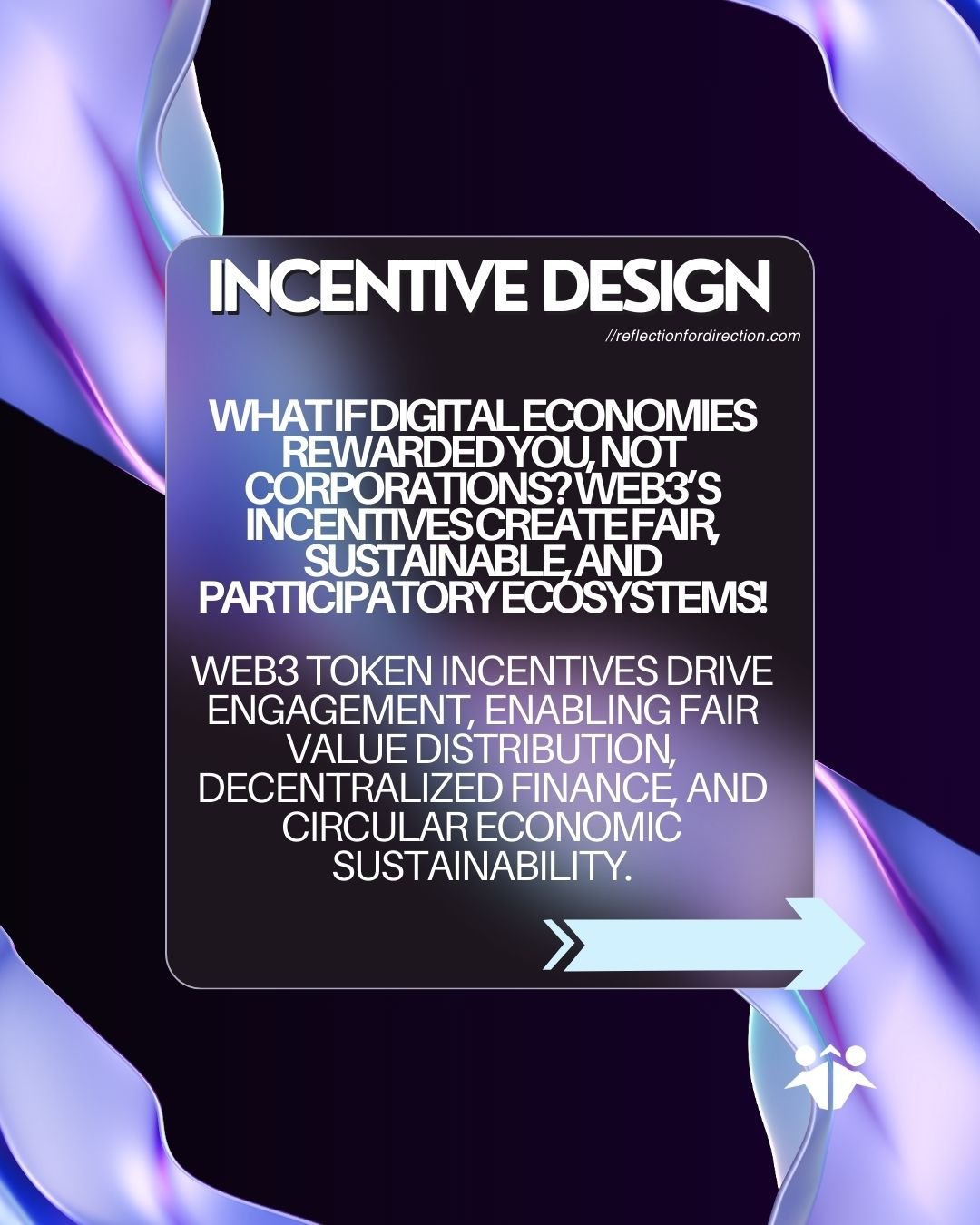
7. Incentive Design
This refers to the strategic creation of token-based rewards, governance mechanisms, and economic models that align participants’ behaviors with the goals of a decentralized system. Unlike Web2, where companies extract value from users (e.g., ad-driven revenue models), Web3 uses cryptographic tokens, staking mechanisms, and decentralized governance to encourage active participation and fair value distribution.
Well-designed incentives ensure that users, developers, and investors contribute to the long-term success and sustainability of a blockchain ecosystem.
From a sustainability perspective web 3.0 encourages Borderless Finance. With decentralized finance (DeFi) it enables access to financial tools without banks.
Web 3.0 also encourages the creation of circular economies, in which users earn tokens for work, then reinvest them into the ecosystem. For example, users can earn tokens by providing services, liquidity, computing power, governance participation, or content. And, instead of cashing out, users reinvest tokens to access premium services, stake for rewards, participate in governance, or fund ecosystem projects.

4 Use Cases for BlockChain
A. Blockchain for ESG Reporting: Trust, Auditability, and Data Integrity
One of the biggest weaknesses in ESG today is not intent, it is data credibility. ESG reporting often relies on spreadsheets, manual consolidation, inconsistent methodologies, and data that cannot be easily audited. Blockchain can strengthen ESG systems by creating tamper-evident records, improving traceability of underlying inputs, and enabling verifiable credentials across reporting workflows.
The most credible applications are those that complement existing reporting systems rather than replacing them, acting as an integrity layer for audit trails, emissions factors, supplier claims, and assurance processes.
I summarise the strongest applications in The Benefits of Blockchain for Sustainability: 4 High-Value Use Cases.
B. Blockchain in Carbon Markets: Tokenised Credits, MRV, and Integrity
Carbon markets depend on trust: trust that a credit is real, not double-counted, not sold twice, and not retired incorrectly. Blockchain can help by making credit provenance and transaction history easier to track, improving transparency of issuance and retirement, and enabling digital MRV systems that reduce verification time lags.
However, tokenisation alone does not solve carbon market integrity. High-quality credits still require strong methodologies, governance, and credible monitoring.
For the adoption barriers, see Why Blockchain Adoption in Carbon Markets Is Slow: 5 Real Barriers.
C. Blockchain for Sustainable Supply Chains: Traceability and Ethical Sourcing
Supply chain sustainability is often limited by fragmented data across suppliers, geographies, and systems. Blockchain can help create end-to-end traceability by logging key events across the supply chain, from raw material provenance to manufacturing, logistics, and certification, as captured in the Blockchain for Supply Chain Transparency report by the EU Blockchain Observatory and Forum.
This is especially relevant for high-risk categories such as deforestation-linked commodities, critical minerals, and sectors where human rights and labour conditions are under scrutiny. The value is not “perfect transparency,” it is stronger evidence and auditability.
D. Blockchain for Climate Finance: Incentives, Funding, and Community Ownership
Climate solutions require capital, but funding often moves slowly through intermediaries, with limited transparency about where money goes and what outcomes are achieved. Blockchain-enabled systems can improve traceability of funds, automate conditional payments through smart contracts, and support new incentive models where rewards are tied to verified outcomes.
In the regenerative finance (ReFi) ecosystem, this is increasingly linked to community ownership and benefit-sharing, ensuring local stakeholders and land stewards have a voice in governance and a fair share of value.
If you want to go deeper:
For SDG-focused applications, see How Web3 Supports the SDGs: 5 Practical Use Cases for Sustainable Development.
For where the market is heading, see Blockchain Sustainability Trends (2026): 5 Shifts Driving Real Adoption.
Conclusion
Imagine a world where businesses can verify their carbon offsets instantly, where global supply chains are fully transparent, and where individuals can directly fund sustainability projects with no middlemen. That’s the potential of Web3 for Sustainability.
Web3 isn’t just a tech upgrade—it’s a paradigm shift in how we trust, collaborate, and build a fairer, greener future. By embracing decentralization, verifiability, and incentive-driven economies, we’re moving toward a world where power is distributed, information is transparent, and sustainability is built-in, not an afterthought.
Gone are the days of middlemen controlling access to resources! With borderless finance, circular economies, and decentralized governance, Web3 is rewriting the rules of engagement. Whether it’s verifying carbon offsets in real time, ensuring ethical sourcing in supply chains, or empowering communities with fair economic models, this is a future we all can shape.
Blockchain is a tool for improving transparency, coordination, and trust in sustainability systems when used appropriately.
FAQ: Blockchain for ESG
1) What is blockchain’s role in ESG reporting?
Blockchain can act as an integrity layer for ESG reporting by strengthening audit trails, traceability of underlying inputs, and verification of claims. It is most useful when multiple parties need to trust shared data, such as suppliers, auditors, project developers, and corporate reporting teams.
2) Can blockchain reduce greenwashing?
Blockchain can reduce greenwashing risks by making sustainability claims more traceable and harder to alter retroactively. However, it cannot guarantee that the original data is accurate, credible outcomes still depend on strong MRV, governance, and standards.
3) What is MRV and why does it matter for carbon markets?
MRV stands for Measurement, Reporting, and Verification. It is the system used to quantify emissions reductions or removals and confirm that carbon credits represent real climate impact. Blockchain can support MRV by improving traceability and reducing verification friction, but it does not replace scientific methodologies.
4) Are tokenised carbon credits regulated?
Regulation is still evolving. Some tokenised carbon models may be treated as financial products depending on jurisdiction, how they are marketed, and whether they create investment-like expectations. For sustainability leaders, the safest approach is to prioritise integrity, transparency, and alignment with recognised carbon market standards.
5) When should a sustainability team avoid blockchain?
Blockchain is usually not the right tool when the core issue is poor data quality, weak governance, or when a simple database would achieve the same result. It can also introduce reputational risk if tokenisation becomes speculative or disconnected from real-world outcomes.
Related Reading
If you want to explore specific Web3 sustainability applications in more depth, you may find these useful: