How Materiality Guides Executive Decision Making
Introduction
In the context of corporate sustainability, Materiality refers to the framework through which a company identifies and prioritizes the ESG issues that truly matter. For sustainability leaders, materiality is a strategic compass that guides resource allocation, mitigates risk, and unlocks long-term value.
Originally a concept in accounting, materiality has evolved into a decision-making tool. By focusing on what is material, executives can translate abstract ESG goals into measurable business outcomes that drive growth, operational resilience, and stakeholder trust.
For me, it’s a fundamental step in devising your sustainability strategy.
Why Materiality is a Hot Topic
So why is it so important. As leaders of companies, you know that you face rising regulatory scrutiny, investor expectations, and strategic complexity, and materiality helps you understand in four ways:
1️⃣ cutting through ESG noise,
2️⃣ building investor trust, and
3️⃣ strengthening long-term business resilience
But, before we talk about those reasons, let’s address the varying forms of materiality.
Understanding Materiality Perspectives
Materiality assessments are not created equally. There are different perspectives on it. Those perspectives usually involve choosing or combining different lenses such as:
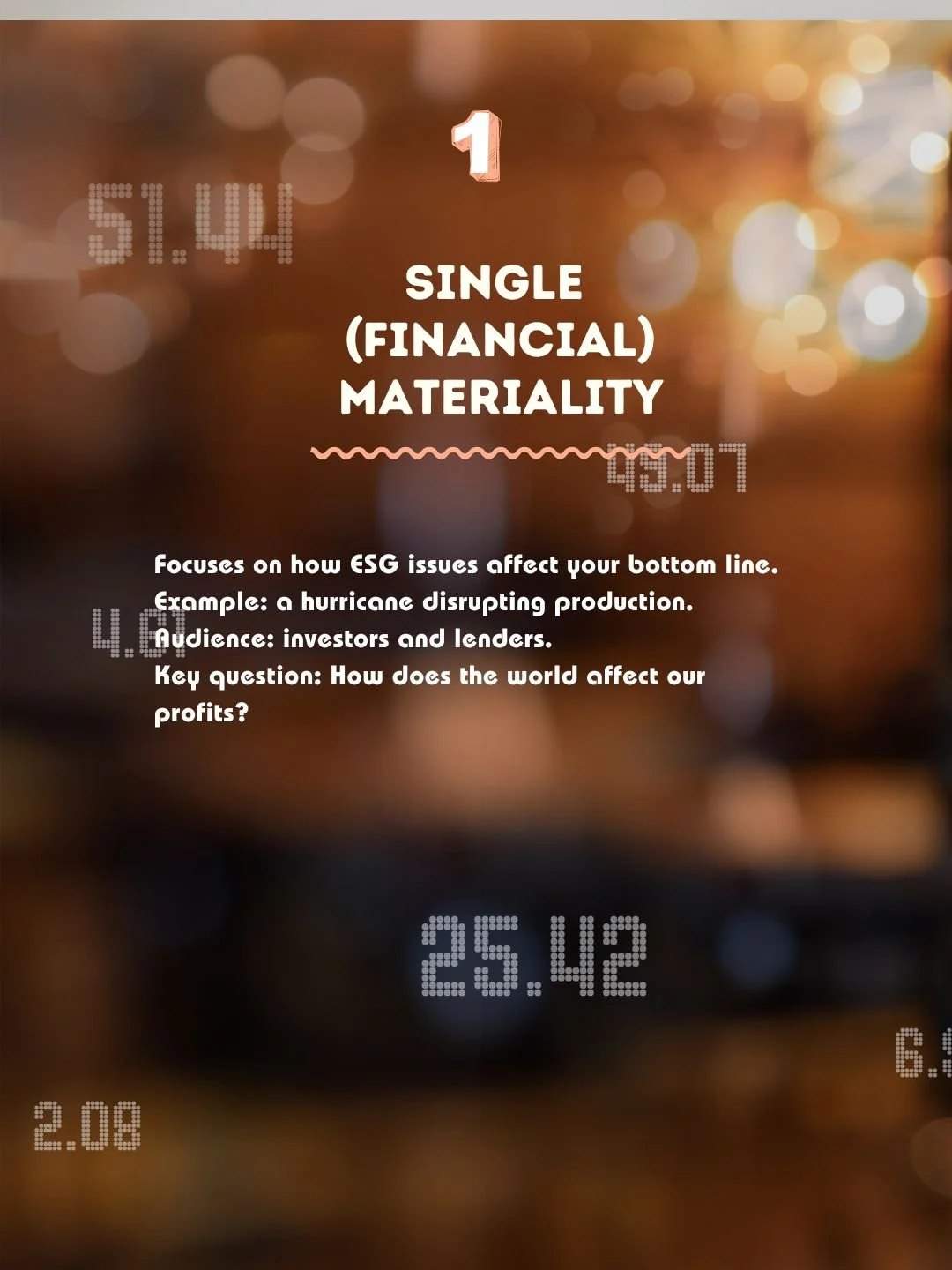
Single (Financial) Materiality: Focuses on how ESG issues affect the company’s bottom line (e.g., how a hurricane might disrupt a factory).
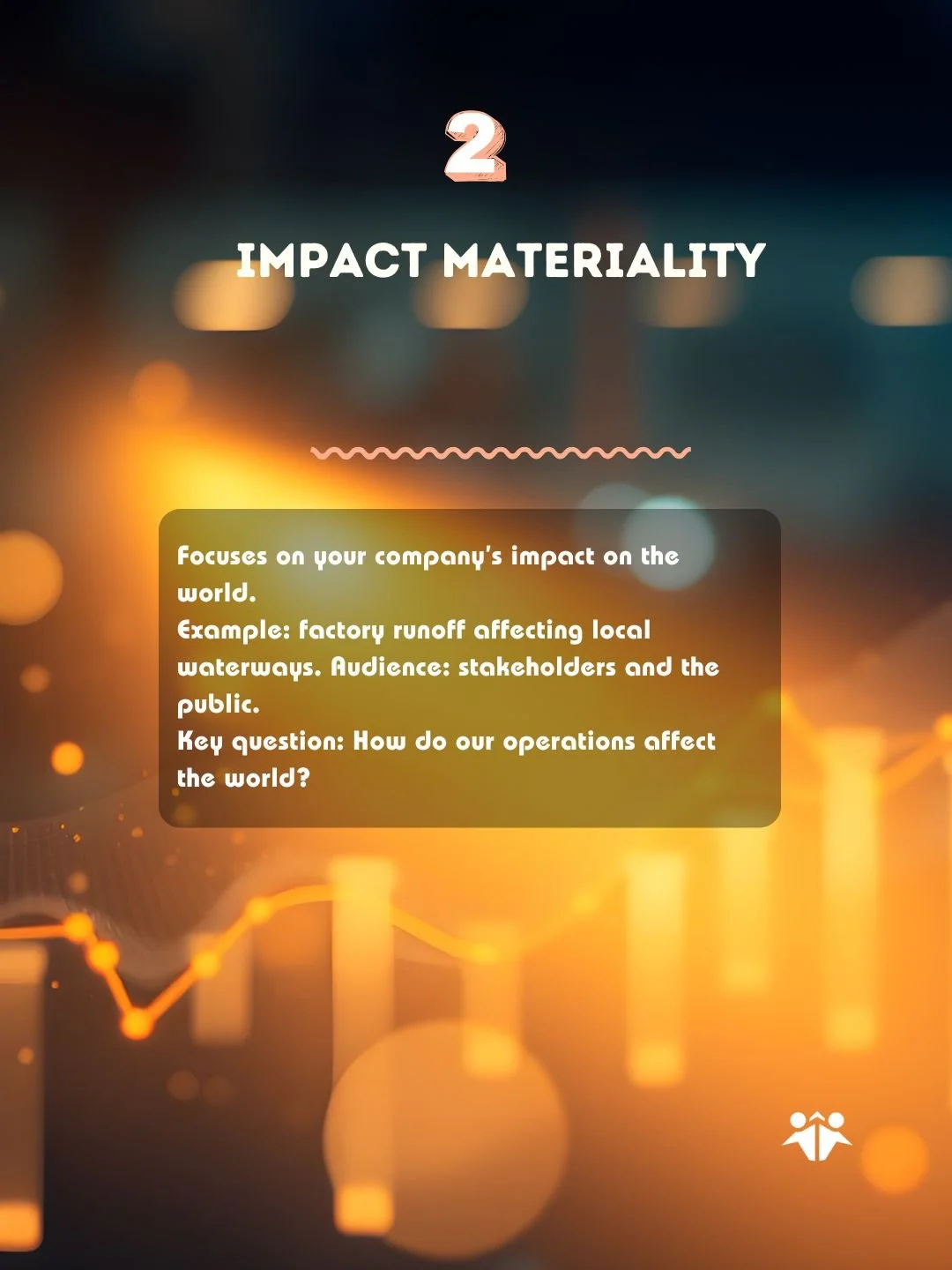
Impact Materiality: Focuses on how the company affects the world (e.g., how the factory's runoff affects local water).
Double Materiality: The modern gold standard (required by the EU’s CSRD), which looks at both directions. This pathway is vital because it recognizes that a company's social/environmental impact eventually creates financial risks.
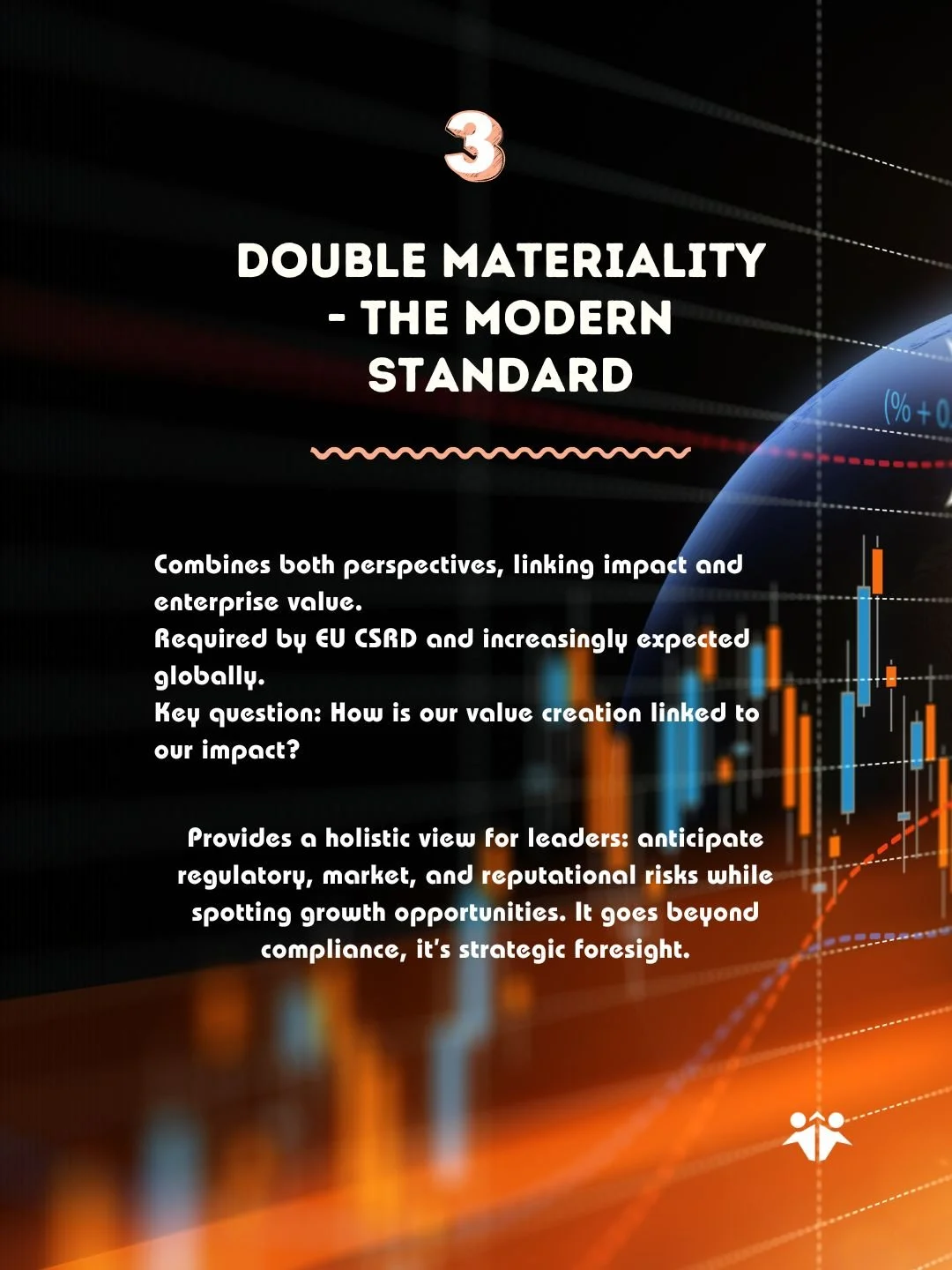
Takeaway: Double materiality provides a holistic view, allowing leaders to anticipate regulatory, market, and reputational risks while identifying growth opportunities.
And, if you’re looking for more information on the materiality process you can find it my article, on ESG Reporting here.
1. Defining Focus in a "Noisy" World
Organizations like yours are, today, pressured to care about everything from carbon footprints to board diversity. Without a clear understanding of what is important, companies suffer from "strategic clutter" i.e. trying to address every issue and succeeding at none.
Prioritization: Materiality helps a company focus on the 5–10 issues where they have the most significant impact (e.g., water usage for a beverage company vs. data privacy for a tech firm).
Resource Allocation: It ensures that capital and human effort are spent on risks and opportunities that actually move the needle for the business and their stakeholders.
Takeaway: Targeted ESG initiatives outperform scattered efforts, driving measurable operational and financial results.
2. Building Investor and Stakeholder Trust
Investors use materiality assessments as a proxy for management quality. A company that understands its "pathway to materiality" demonstrates:
Risk Mitigation: It shows they have identified hidden risks (like supply chain human rights issues) before they become legal or reputational disasters.
Transparency: It provides a clear "why" behind the data being reported, preventing "greenwashing" by showing the methodology used to select certain metrics.
Takeway: In short, materiality strengthens your companies credibility, facilitating smoother capital access, regulatory approvals, and strategic partnerships.
3. Driving Long-Term Resilience
Materiality is dynamic. It is often described as a "process of becoming." It’s why I often say, “sustainability is a journey.”
Dynamic Materiality: Issues that are not material today (like a niche regulation) can become material tomorrow. Having a formal pathway allows a company to anticipate these shifts rather than reacting to them.
Strategic Alignment: By engaging with stakeholders (employees, customers, regulators) through these pathways, a company aligns its business model with the evolving expectations of the society it operates in.
Conclusion
So, in short, for a lot of organizations materiality is a strategic compass. By identifying and prioritizing the ESG issues that truly matter, companies can focus resources where they generate the greatest impact, mitigate risks before they escalate, and build trust with investors, customers, and regulators.
A disciplined approach transforms abstract values into measurable business outcomes, guiding decisions from capital allocation to workforce management.
In an era of rapid environmental and social change, executives who embrace materiality not only safeguard their organizations but also unlock new avenues for growth, resilience, and long-term competitive advantage.